
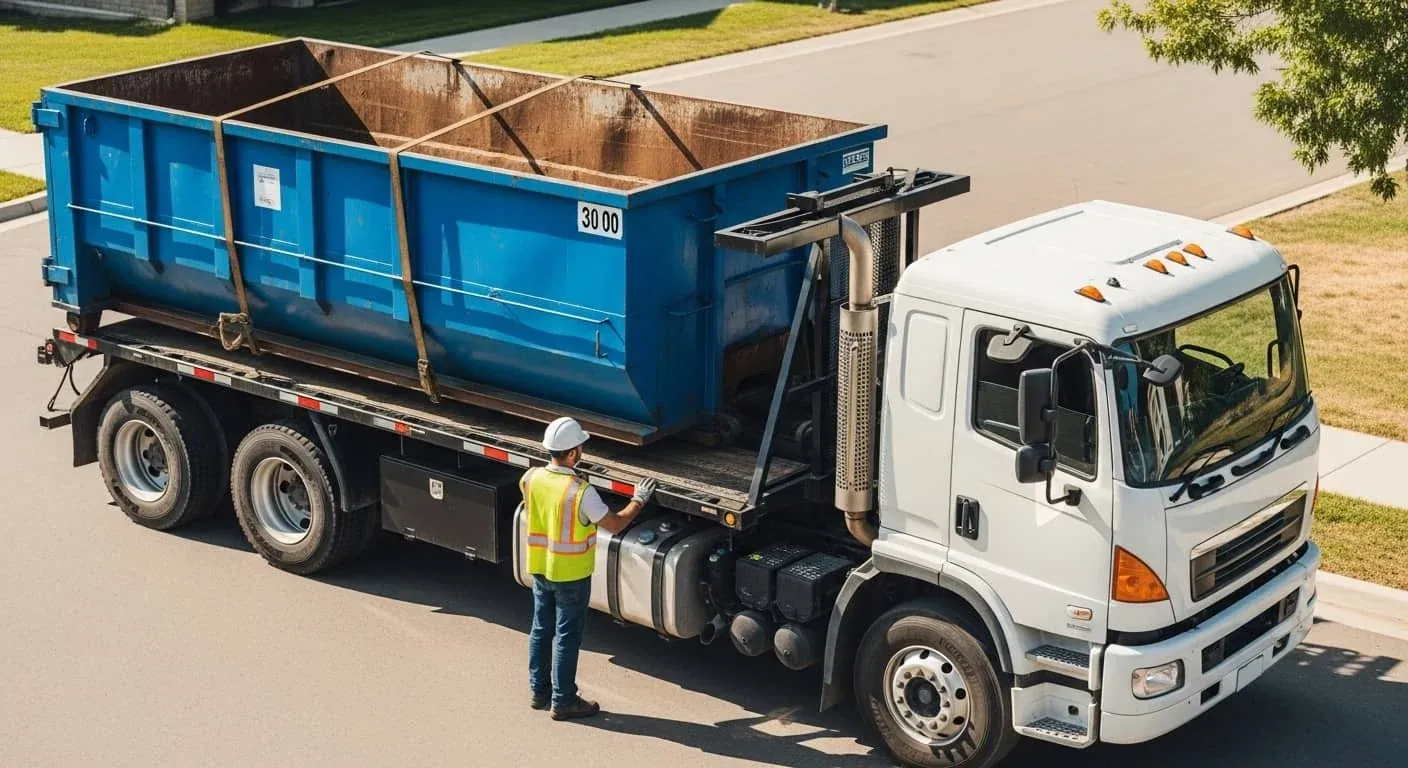
Compare all five sizes
Dumpster Sizes in Lakewood, CO — 10, 15, 20, 30 & 40 Yard
Five roll-off sizes, and the honest version of which one you actually need. The right answer is driven by what the debris weighs at least as often as by how much of it there is.
All sizes
Pick by weight first, volume second
Scroll the table on mobile. If your load includes concrete, flagstone, landscape rock, sod, dirt or tile, start at the 10 yard no matter how big the job looks.
| Size | Capacity | Footprint | Weight allowance | Holds about | Best for |
|---|---|---|---|---|---|
| 10 Yard Dumpster | 10 yd³ | 12 ft x 8 ft x 3.5 ft | 2 – 3 tons | ~3 pickup truck loads | Concrete, flagstone, landscape rock, brick, dirt, tile and small heavy-debris jobs. |
| 15 Yard Dumpster | 15 yd³ | 16 ft x 8 ft x 4 ft | 2 – 3 tons | ~4 – 5 pickup truck loads | Single-room remodels, roof tear-offs to about 20 squares, garage cleanouts. |
| 20 Yard Dumpster | 20 yd³ | 22 ft x 8 ft x 4.5 ft | 3 – 4 tons | ~6 – 8 pickup truck loads | Kitchen guts, basement finishes, multi-room renovations, large cleanouts. |
| 30 Yard Dumpster | 30 yd³ | 22 ft x 8 ft x 6 ft | 4 – 5 tons | ~9 – 12 pickup truck loads | Whole-home cleanouts, new construction, additions, commercial projects. |
| 40 Yard Dumpster | 40 yd³ | 22 ft x 8 ft x 8 ft | 5 – 6 tons | ~14 – 16 pickup truck loads | Maximum volume for bulky light debris: framing, siding, cabinetry, fit-outs. |
10 Yard Dumpster
Concrete, flagstone, landscape rock, brick, dirt, tile and small heavy-debris jobs.
View this size → 15yd³15 Yard Dumpster
Single-room remodels, roof tear-offs to about 20 squares, garage cleanouts.
View this size → 20yd³20 Yard Dumpster
Kitchen guts, basement finishes, multi-room renovations, large cleanouts.
View this size → 30yd³30 Yard Dumpster
Whole-home cleanouts, new construction, additions, commercial projects.
View this size → 40yd³40 Yard Dumpster
Maximum volume for bulky light debris: framing, siding, cabinetry, fit-outs.
View this size →The rule that saves people money
Heavy material makes you size DOWN, not up
This is the single most useful thing on the page. A container has two limits: how much volume it holds and how much weight a truck can legally lift and carry. For light debris you run out of volume first. For dense material you run out of weight first, and it happens far earlier than people expect.
Around the Front Range the usual culprits are concrete and flatwork, flagstone, brick, decorative landscape rock and 3/4-inch gravel at roughly 2,400–2,800 lbs per cubic yard, sod that comes up with two to four inches of soil attached, dirt, and tile. Any of those will hit legal transport weight in a container that still looks half empty.
So a 900 square foot xeriscape conversion does not need a 30 yard. It needs a 10 yard, probably twice. The same logic applies to a roof: asphalt tear-offs are weight-driven, and a 40 yard full of shingle could never legally leave your driveway.
Tell us the material and the rough quantity on the phone and we will size it properly. Getting it wrong costs us more than it costs you, so we have every reason to get it right.

How it works
From phone call to empty driveway
- 1
Call us
Tell us the project, your address and when you want it. Two minutes on the phone and you have a flat price.
- 2
We deliver
Our driver walks the drop, lays protection boards and sets the container exactly where you want it.
- 3
You load it
Take your time within your rental window. Keep it level with the top rail and we handle the rest.
- 4
We haul it
Call or text when you are done. We pull it, sort what can be recovered and dispose of the rest properly.
Choosing a Size — FAQs
Which dumpster size is most popular in Lakewood?
The 20 yard, by a wide margin. It suits kitchen guts, basement finishes, multi-room renovations and three-bedroom cleanouts, and it still sits on a normal driveway. The 15 yard is the next most common because it is the sweet spot for a single room or a single roof.
What size do I need for a roof after hail?
For most Denver-metro homes, a 15 or 20 yard. Roofing is weight-driven, not volume-driven, so squares and material matter far more than roof area. Class 4 impact-resistant shingle is heavier per square than standard architectural, and concrete or clay tile is heavier again. Our roofing sizing guide has the full maths.
Is the 40 yard just the biggest and best?
No, and treating it that way is an expensive mistake. The 40 yard is a volume container for bulky light debris such as framing, siding, cabinetry, packaging and whole-house cleanouts. Put anything dense in it and you will exceed legal transport weight long before it is full. It also needs the most approach room and overhead clearance.
Can I change size after I book?
Yes, as long as the truck has not been dispatched. If you describe the job and we think you have ordered wrong, we will say so before delivery rather than after. Changing on the phone costs nothing; discovering it at the scale house costs a great deal.
How much space do I need?
Roughly the container footprint plus working room, about 60 feet of straight approach for the truck and around 23 feet of overhead clearance while the hoist operates. A 10 yard fits almost anywhere; a 30 or 40 needs a real driveway, an alley with room, or a permitted street placement.
Services
What people put in them
Residential Dumpster Rental
Driveway, alley or street placement for cleanouts, remodels and basement projects.
Learn more →Commercial Dumpster Rental
Scheduled and on-call containers for retail, restaurants, offices and property managers.
Learn more →Construction Dumpster Rental
Jobsite roll-offs and next-day swap-outs for builders, remodelers and GCs.
Learn more →Roofing Dumpster Rental
Weight-rated cans for hail tear-offs, Class 4 shingle and concrete tile roofs.
Learn more →Roll-Off Dumpster Rental
10, 15, 20, 30 and 40 yard roll-offs delivered across Lakewood and Jefferson County.
Learn more →Same-Day Dumpster Rental
Call before the cut-off and we can usually get a container to you this afternoon.
Learn more →Talk to a real person
Not sure which size you need?
Tell us what you are clearing out and we will tell you the right size and the flat price to put it in your driveway. No forms, no waiting on an email — just call and we will sort it out in a couple of minutes.
Serving Lakewood, Jefferson County and the west Denver metro · Mon–Fri 6:30am–6pm, Sat 7am–3pm