Compliance
Asbestos Testing Before You Renovate in Colorado: What Homeowners and Contractors Actually Have to Do
Colorado requires a certified asbestos inspection before renovation or demolition disturbs suspect material. Here is what actually gets tested in Lakewood's mid-century housing, how the process works, and why testing comes before the dumpster.
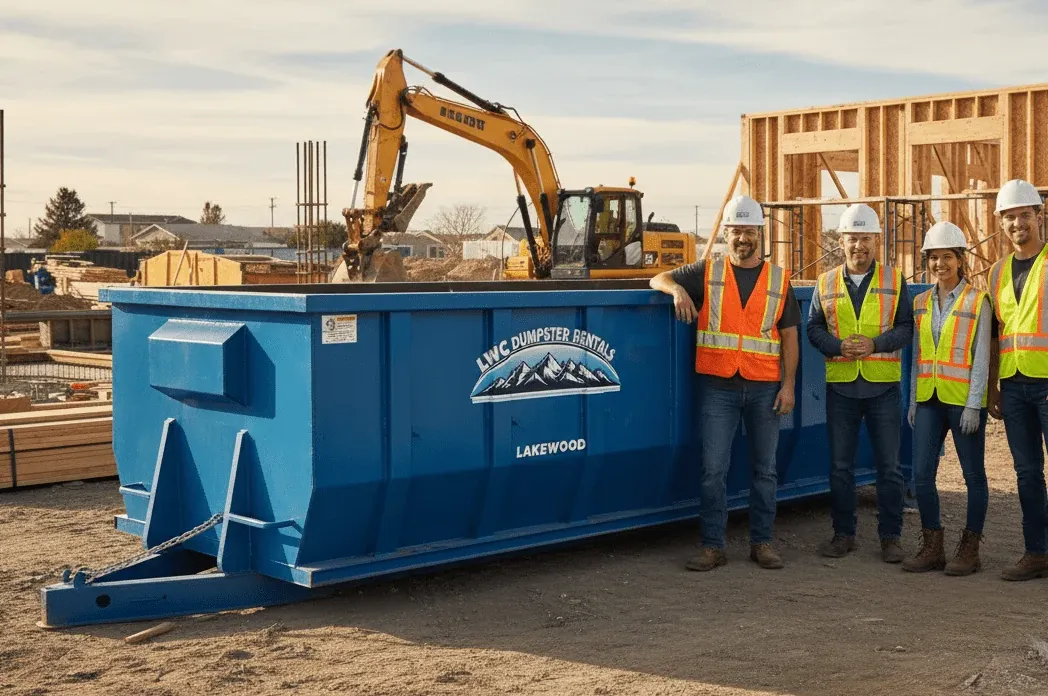
Every so often we pull up to a house in Lakewood, take one look at what is stacked on the driveway, and drive away empty. When the pile is bagged popcorn ceiling scrapings out of a 1962 brick ranch and nobody can produce an inspection report, that container does not get loaded. Not that day, not for a discount, not "just this once."
Asbestos is the most misunderstood step in a Front Range remodel — not because the rules are hidden, but because they run backwards from how most people plan a project. Folks book the dumpster and the crew, then figure they will sort out paperwork in the middle. In Colorado, testing comes first. Before the permit. Before the container. Before anybody touches a ceiling with a scraper.
We have hauled debris out of west Denver and Jefferson County since 2012, and we are not an abatement company, an inspector or a lab. Nothing here is legal advice. Confirm every current requirement directly with CDPHE and with the building department that has jurisdiction over your address before you start work. The rules get revised, and the version in your neighbor's head from 2009 is not the one that will be enforced on you.
Why Colorado is stricter than most states
Asbestos in Colorado is governed by the Air Quality Control Commission's Regulation No. 8, Part B, administered by the Colorado Department of Public Health and Environment. A lot of states lean almost entirely on the federal NESHAP rules, which mostly leave single-family homes alone. Colorado does not. Reg 8 Part B reaches into residential work in a way that surprises people who moved here from elsewhere.
Two things matter most. First, suspect material has to be inspected by a Colorado-certified Asbestos Building Inspector — someone the state has actually credentialed, typically working through a registered consulting firm — before renovation or demolition disturbs it. Second, the regulation sets trigger quantities, and once your project will disturb more than those amounts of asbestos-containing material, it becomes a regulated abatement project with notification, permitting and waiting-period requirements attached.
The thresholds are different for a house than for a commercial or public building. As CDPHE publishes them, a single-family residential dwelling triggers at roughly 50 linear feet on pipes, 32 square feet on other surfaces, or the volume equivalent of a 55-gallon drum. Public and commercial buildings sit much higher — on the order of 260 linear feet on pipes, 160 square feet on other surfaces, or the same drum equivalent. Read those residential numbers again. Thirty-two square feet is a stretch of ceiling smaller than a modest bedroom, or the floor of a hall bath in tile. It is a low bar, and it is meant to be.
The other piece people miss: regulated projects carry a notification and waiting period before work can start — the state's process runs on the order of ten working days for standard projects, with a formal waiver process for genuine emergencies. That is dead time on your schedule if you did not plan for it. Do not take our word for the current numbers, forms or fees. Pull them from the source: CDPHE's asbestos support and guidance page is where the state posts inspection, notification and certification requirements, and it is updated more often than any blog is.
The permit desk is where this catches people
Here is the practical reality across the metro. Many Colorado building departments will not issue a demolition permit — and often not a substantial renovation permit — without an asbestos inspection report attached to the application. For full demolition, the expectation is generally that the whole structure gets inspected, even when nobody suspects anything.
So the sequence is not optional. Test, then permit, then container, then demo. We have watched homeowners lose two weeks with a 20-yard box on the driveway accruing rental days while they waited on a lab and a permit clerk. Our guide to dumpster permits in Lakewood covers container placement — but a right-of-way permit for a roll-off and an asbestos report for a building permit are separate animals. Requirements vary by jurisdiction: Lakewood, unincorporated Jefferson County, Wheat Ridge, Edgewater and Denver each run their own counter. Call yours.
What is actually suspect in Lakewood's housing stock
Most of Lakewood went up between the early 1950s and late 1970s — brick ranches, tri-levels and split-levels, plus the same vintage through west Denver, Wheat Ridge, Edgewater and Applewood. That is the exact window when asbestos was in everything. If your house is from that era, assume suspect until a lab says otherwise. We cover this whole corridor; see our service areas page. The materials that come back positive around here are boringly consistent.
| Material | Typical era | Where you find it | Risk when disturbed | What to do |
|---|---|---|---|---|
| Popcorn / textured ceilings | 1950s–early 1980s | Living areas, bedrooms, halls | High — dry scraping aerosolizes fibers housewide | Test first. Never sand or dry-scrape. |
| Joint compound and taping mud | 1950s–late 1970s | Every taped seam | High — sanding or demo makes fine dust | Sample the compound, not just the board. |
| 9x9 and 12x12 vinyl floor tile | 1950s–1980s | Basements, kitchens, hall baths | Moderate — high if broken or ground | Test tile and mastic separately. |
| Black cutback mastic | 1950s–1980s | Under tile and sheet goods | Moderate to high during removal | Sample as its own material. |
| Sheet vinyl backing / felt | 1950s–1980s | Kitchens, baths, laundry | Moderate — backing tears and powders | Test the backing layer. |
| Pipe and duct insulation, wrap, tape | Pre-1980 | Crawlspaces, mechanical rooms | High — friable, crumbles by hand | Do not touch. Expect abatement if positive. |
| Boiler and furnace jackets, door rope | Pre-1980 | Old gravity furnaces | High — friable insulation inside | Inspect before any mechanical swap. |
| Transite siding, panels, flue pipe | 1940s–1970s | Siding, soffits, heater flues | Moderate — high if cut or dropped | Do not break it out. Test first. |
| Window glazing putty and caulk | Pre-1980 | Original steel and wood sash | Low to moderate | Test before window replacement. |
| Roofing felt, shingles, flashing cement | Pre-1980 | Roof deck, valleys | Low to moderate — tear-off breaks it | Test pre-1980 roofs before tear-off. |
The popcorn ceiling scrape is the classic trap
This is the one that gets good people in trouble. A textured ceiling looks like a Saturday project — spray bottle, wide blade, drop cloths, done by dinner. In a pre-1980 Colorado house it is nothing of the sort. If that texture tests positive and the area you are scraping exceeds the residential trigger — and a single average living room clears 32 square feet without trying — you are performing a regulated asbestos abatement, whether you meant to or not. Dry-scraping it is the worst version: you are putting fibers into the air of a closed house, they settle in carpet, ductwork and furniture, and you and your family go on breathing that for years. There is no cleanup shortcut for that. Cross-contaminating the whole house is exactly how a $600 test turns into a five-figure problem.
Test the ceiling. Not a hard phone call.
How testing actually works
The process is less painful than the anxiety around it. You hire a Colorado-certified asbestos building inspector. They walk the scope, identify suspect materials, and take small bulk samples — a coin-sized divot of texture, a chip of tile with the mastic attached, a pinch of pipe wrap. Samples go to an accredited laboratory. You get back a written report identifying each material, whether it contains asbestos, and at what percentage.
Turnaround is typically days, not weeks, and rush options usually exist. Pricing depends on how many materials need sampling, so get a couple of quotes. Whatever it costs, it is small next to a stop-work order or gutting a contaminated house. Insist on two things: the inspector is state-certified and the lab accredited, and the report covers everything your scope will disturb. A report on the ceiling does not cover floor tile you decide to pull two weeks later. Verify current certification expectations with CDPHE before you hire.
If it comes back positive
Positive is not a catastrophe, it is a different project. Above the trigger quantities, the work goes to a Colorado-certified General Abatement Contractor: containment and negative air, respiratory protection, wet methods, state notification with its waiting period, and — for friable work — air clearance sampling before containment comes down.
Then disposal. Asbestos waste goes to a facility permitted to receive it, sealed and labeled, with the manifest and paper trail that goes with it. That is never a roll-off container. Not ours, not anybody's. No size, no premium and no signed waiver makes it legal to put ACM in an open-top box bound for a standard C&D landfill. Your abatement contractor handles that waste stream end to end. The EPA's overview of asbestos and how it is regulated is a good plain-English backgrounder while you are getting bids.
If it comes back negative
Then you are running a normal job, and this is where we come in. Clean demolition debris — drywall, lumber, flooring, cabinets, trim, roofing — is ordinary construction and demolition waste and it goes straight in the container. That is our daily bread on demolition debris and construction jobs all over the west metro.
For a single-room gut, a 20 yard usually covers it. A whole-floor remodel or a full interior tear-out on a ranch typically wants a 30 yard. If you are not sure, our sizing guide walks through it by project type, and our residential rental page covers how flat-rate pricing works. For the prohibited-materials list beyond asbestos — paint, chemicals, tires, appliances with refrigerant — see what can and cannot go in a dumpster in Jefferson County and our notes on construction debris disposal across the Denver metro.
What skipping the test actually costs
A stop-work order from an inspector who noticed a 1960s house with a texture ceiling coming down and no report on file. State enforcement, which you do not want to research from the receiving end. A jobsite contaminated badly enough that cleanup dwarfs the remodel. A disclosure problem at closing that scares a buyer off. Crews and family members exposed to something whose bill arrives twenty or thirty years later as asbestosis, lung cancer or mesothelioma. None of that is worth the few days you saved.
Where we stand as your hauler
Cole started this company in 2012 and the rule has not moved since: we cannot accept asbestos-containing material in any container, and we will not accept a load we have reason to believe is contaminated. Tell us the popcorn ceiling is coming down in a 1962 ranch off Wadsworth with no inspection report, and we will tell you to test first. If the material looks wrong when we arrive, we reschedule. More on how we operate is on our about page.
We would rather lose the job than take a load we should not. A contaminated load hurts the landfill, hurts the driver, and lands squarely back on whoever generated it.
Sequence the job right and none of this hurts
Test. Permit. Container. Demo. In that order, every time, on any pre-1980 building. Get the inspector out during planning, while you are still pricing the work. Take the report to your building department and get the permit issued. Then call us and we will drop the box, ready to be filled with clean debris.
If you are staring at a 1965 basement and honestly do not know what you are looking at, call us anyway. We will tell you straight whether it is a container job or a test-first job. Ready to line up your container once the report is in hand? Call LWC Dumpster Rental Lakewood at (720) 473-6600 or reach us through our contact page for flat-rate pricing on 10, 15, 20, 30 and 40 yard roll-offs across Lakewood and Jefferson County — and confirm your asbestos requirements with CDPHE and your local building department before the first swing.
Questions this guide did not answer? Call (720) 473-6600. We would rather spend two minutes on the phone than have you order the wrong container.