
Cleanouts
The Weekend Whole-Home Cleanout: A Room-by-Room Plan for Lakewood Homeowners
A Lakewood hauler's room-by-room plan for clearing a whole house in one weekend, with honest hour estimates, dumpster sizing, Colorado landfill bans, and the gear-garage problem.
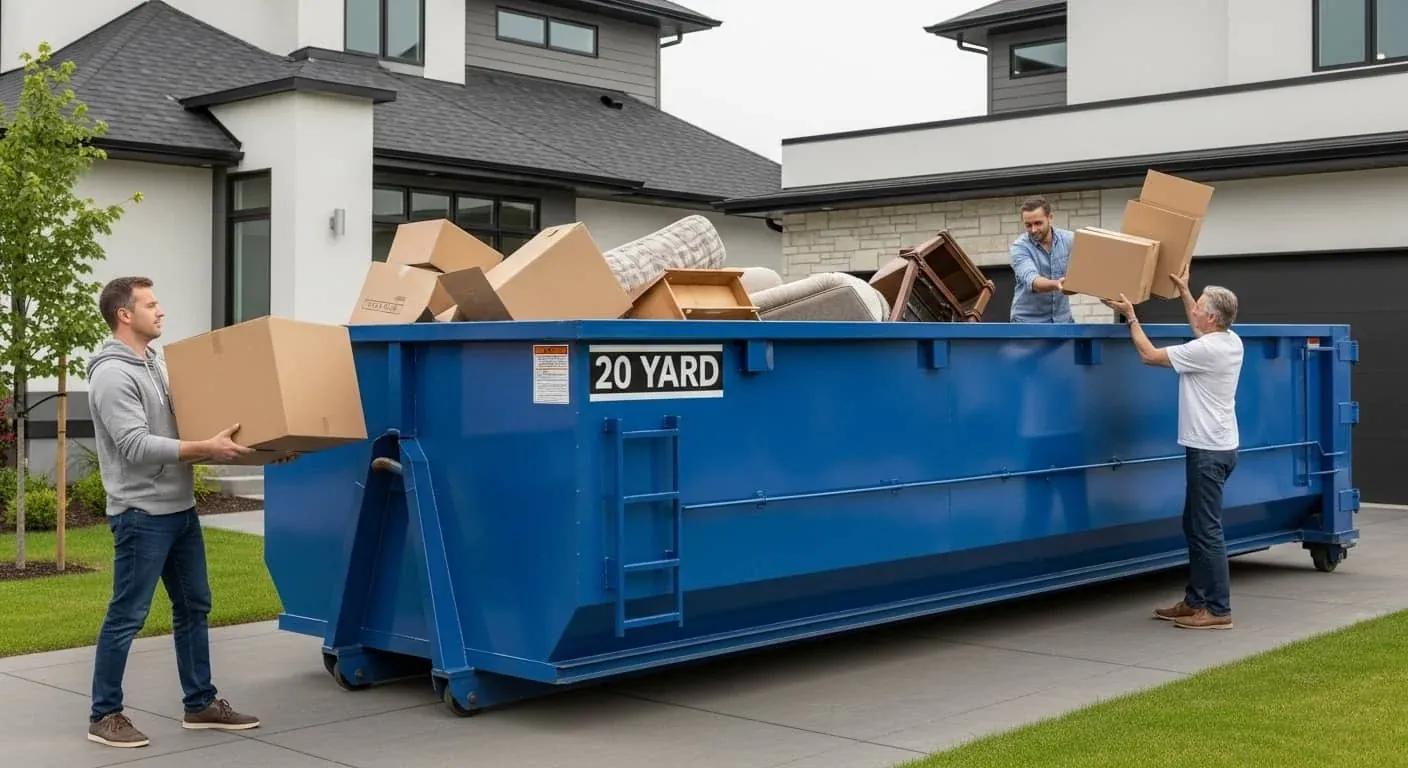
I have been hauling cans in Lakewood since 2012, and the same thing happens every spring and every August. Somebody calls on a Thursday, says the whole family is in town Saturday and Sunday, and they want to finally deal with the house. Then they ask if they should wait until they have "sorted through everything first." No. That is the call that turns a two-day project into a two-year project.
A whole-home cleanout is a logistics job wearing the costume of an emotional job. Get the logistics right and the emotional part gets a lot easier, because there is a steel box in the driveway and it is leaving Monday. Here is how we tell folks to run the weekend.
Set the scope before you set the alarm
Walk the house Wednesday night with a notepad and be honest. A 1,400 square foot brick ranch off Wadsworth with a finished basement and a two-car garage is not a Saturday morning. Real numbers from jobs we service every month: a bedroom is 1 to 2 hours, a kitchen is 3 to 5, an average Lakewood full basement is 6 to 10, and an attached garage that has been doing double duty as a workshop is 4 to 8. Add it up before you commit. Most families are looking at 16 to 24 person-hours minimum, which is why you want four adults, not two.
Then decide what "done" means. Done is not "sorted." Done is empty, swept, and the container is gone. Write that on the fridge.
The container-first principle
This is the whole article in one paragraph. Have the can on site the morning you start. Not day two, not "once we see how it goes." When there is nowhere to put the junk, people invent a staging area — usually the garage — and the staging area becomes permanent storage. I have delivered to houses where the garage pile was three years old and started as a weekend cleanout.
Book it for Friday afternoon so it is sitting there Saturday at 7 a.m. We run same-day and next-day delivery across Jefferson County, so a Thursday call is usually fine, but Saturdays in May and June fill up. If you are not sure how the whole thing works, our residential dumpster rental page walks through delivery, driveway placement and pickup, and driveway protection matters if you have a newer concrete pour or fresh sealcoat.
Sizing: 15, 20 or 30 yard
Nobody has ever called me and said the can was too big. Plenty have called Sunday afternoon asking for a swap-out. Rough rule for west-metro homes:
| Zone | Typical time | Typical volume | Watch out for |
|---|---|---|---|
| Bedrooms & closets | 1–2 hrs each | 1–2 yards | Clothing is heavy; bag it, do not box it |
| Kitchen & pantry | 3–5 hrs | 2–3 yards | Expired food weight, small appliances with cords |
| Living areas | 2–4 hrs | 2–4 yards | Old TVs — landfill banned in Colorado |
| Full basement | 6–10 hrs | 6–12 yards | Collapsed boxes, mouse droppings, stair carries |
| Crawlspace | 1–3 hrs | 1–3 yards | Low clearance, dust, one person in / one out |
| Attached garage | 4–8 hrs | 4–8 yards | Paint, chemicals, propane, batteries, tires |
| Back shed | 2–4 hrs | 2–4 yards | Pesticides, fuel cans, rotted wood, wasps |
| Attic / rafters | 2–4 hrs | 2–4 yards | Heat, swamp cooler parts, unfloored joists |
A 1,000 to 1,400 square foot ranch with light clutter and no basement finish lands in a 15 yard. The typical Lakewood cleanout — three bedrooms, full basement, garage — is a 20 yard, and that is what we drop most often. If the basement has been absorbing storage since the Clinton administration, or you are clearing a house nobody has lived in for a while, go 30 yard and stop thinking about it. Compare the footprints on our dumpster sizes page, and if you are still torn, the size guide has real photos of loaded cans.
Four piles and three rules
Keep, sell, donate, dispose. Tape a sign on four spots in the driveway or front yard. The dispose pile does not exist, because dispose goes straight in the can — every time you set something down "for now," you have created work.
Three rules kill deliberation, and deliberation is what eats the weekend:
- The one-year rule. If it has not been used in twelve months and it is not seasonal gear you actually still use, it goes.
- The replacement-cost test. If you could replace it for under $30 and it would take under 20 minutes to get, you do not need to store it for five years.
- Photograph the sentiment. Kids' art, the trophy, the concert shirt that no longer fits. Take a picture, keep the picture. It works better than people expect.
Room-by-room order of attack
Start where the emotion is lowest. Momentum is a real resource. Run it in this order: garage and shed first, then linen closets and the laundry room, then bathrooms, then the kitchen, then the basement, then bedrooms, and finally the one closet with the photo albums and your dad's paperwork — last, when the crew is warmed up and the easy 60 percent of the volume is already in the can.
Bedrooms last also means people are not still standing over a shoebox of letters at 4 p.m. Saturday with the basement untouched.
The Lakewood-specific zones
The full basement
Almost every brick ranch between Alameda and Jewell has one, and it has been quietly absorbing storage for forty years. Denver's dry air means our basements are usually dusty rather than mildewed — that is the good news. The bad news is that cardboard still collapses under its own weight, mice still get into anything paper or fabric, and forty-year-old dust is genuinely nasty. Wear an N95, not a bandana. Bring a shop vac and a headlamp, and set up a stair relay so one person is not carrying everything up alone.
The crawlspace
Two-person job, always. One person feeds boxes out, one receives. Do not go under there alone, and do not go under there in shorts.
The garage, the shed, and the gear
Here is where west-metro cleanouts are different from anywhere else in the country. The attached garage is not parking, it is a workshop and a gear depot. Expect skis and boards nobody has clicked into since 2009, three bikes with flat tires and one good one, a tent that smells like 2014, climbing rope you should not trust anymore, a roof box, six coolers, a smoker, patio furniture that high-altitude UV has turned chalky and brittle, and swamp cooler panels and pads stacked in the rafters.
Be ruthless but be smart about value. Skis and boards from the last ten years, quality bikes, packs, sleeping bags, roof boxes and hard coolers move fast at a consignment shop or a spring gear swap. Straight shovels and rear-entry boots from the 90s do not — that is landfill. Retire climbing rope, harnesses and helmets outright; do not donate life-safety gear. Sun-cooked plastic patio furniture cracks when you look at it and goes in the can. Aluminum frames, old swamp cooler housings, steel shelving, bed frames and the dead water heater are worth pulling out and running to a scrap yard as a separate load. It is 30 minutes of work for real money.
What does not go in the can
This is the part that gets people charged extra, so read it twice. Keep these out:
- Paint and stain — free drop-off through PaintCare at participating Jefferson County retailers.
- Chemicals, solvents, pesticides, pool chemicals, fuel — household hazardous waste, by appointment.
- Propane cylinders, including the little green camping ones.
- Tires and car batteries — tire shops and auto parts stores take these.
- Freon appliances — fridges, freezers, window AC units, and evaporative coolers with refrigerant components.
- Televisions, monitors and computers — these are banned from Colorado landfills and must go to certified e-waste recycling.
Jefferson County publishes current household hazardous waste and e-waste drop-off details at jeffco.us, and the state's guidance on the electronics landfill ban lives at cdphe.colorado.gov. Our own breakdown is here: what can go in a dumpster in Jefferson County. Set a cardboard box by the garage door labeled HAZ on hour one — it saves a second trip.
Load it like you are paying for the space, because you are
You can fit roughly 30 percent more in the same can with technique. Break everything down — a dresser flat is a quarter of the space it was standing. Heavy and flat goes on the floor first: doors, plywood, box springs stripped to the frame. Fill voids with soft goods and bags. Furniture on its side against the walls, not in the middle. Load from the far end back toward the door. And keep it level with the top rail — anything mounded over is a load we legally cannot haul, and that becomes your problem Monday.
Stop if you hit popcorn ceiling or old floor tile
Real caution, not fine print. If the cleanout turns into scraping a textured ceiling, pulling 9x9 vinyl tile, or tearing out old duct wrap, stop. Colorado requires testing before disturbing suspect materials in homes of that vintage, and a lot of west-metro housing stock qualifies. Read our asbestos testing guide before a single scraper touches that ceiling. A test costs a fraction of what an improper abatement costs.
Crew, food, and altitude
Four adults, two vehicles, and lunch bought at 11:30 before anyone gets cranky. Pizza and a cooler of water and Gatorade is the cheapest productivity tool in this business.
Altitude is not a joke at 5,500 feet. The air is thin and dry, you dehydrate without sweating visibly, and you will sunburn in February hauling in the driveway. Everybody drinks more than they think they need. Attics in July run 130 degrees — work them at 7 a.m. or not at all. Gloves on every pair of hands, closed-toe boots, and nobody carries anything heavy or awkward down basement stairs alone. That is how weekends end in urgent care.
The 30-minute reset
Before anybody leaves Sunday, run one lap: sweep every room, wipe the counters, take the donation load to the car, walk the driveway for nails and screws, and text me the pickup. Thirty minutes. The difference between a house that is empty and a house that feels finished is that half hour, and the crew is right there.
We do this every week
Cole Barrett has been running LWC since 2012, flat-rate and licensed, and we know which Lakewood driveways fit a 30 and which ones need a 20. If you would rather not touch any of it, we also do full-service junk removal and estate cleanouts. Just call and tell us the house — three bedrooms, full basement, Green Mountain, garage packed — and we will tell you the size in about a minute. Get the can on site day one and call (720) 473-6600, or reach us through the contact page, and we will have it in your driveway before Saturday morning.
Questions this guide did not answer? Call (720) 473-6600. We would rather spend two minutes on the phone than have you order the wrong container.