
Storm & Hail
Hail Damage on the Front Range: What Happens Between the Storm and the New Roof
Hail season runs May through September on the Front Range. Here is the real sequence from storm to finished roof, what your carrier pays and when, and how to time the container.
If you have owned a house in Lakewood for more than a couple of summers, you know the sound. Somewhere between mid-May and the end of September a cell drops out of the foothills, tracks east over Green Mountain and Belmar, and for eight minutes your roof takes a beating. Then the sun comes out and by dinner there is a guy in a polo shirt on your porch with a clipboard.
I have been running roll-offs on the west side since 2012 and I have staged containers for hundreds of hail roofs in Jefferson County. I am not an adjuster and I am not a roofer, but I sit in the middle of this process on every job, and I can tell you where homeowners lose money and where the whole thing quietly goes sideways. Nothing here is legal or financial advice — confirm your policy with your own carrier and your rights with the Colorado Division of Insurance.
The first 48 hours: document before anybody touches anything
The most valuable work you will do on this claim happens before a contractor gets on a ladder, and it costs nothing. Photograph and video everything from the ground, dated, walking the full perimeter. Do not climb up there — wet hail-bruised shingles are slick and you are not being paid to fall off your house.
- Gutters and downspouts. Dents on the top lip of an aluminum gutter and dimples in a downspout are some of the cleanest corroborating evidence there is. Hail does not selectively hit metal.
- Window screens and wraps. Torn or bowed screens, dinged aluminum window wrap, chipped vinyl.
- Siding, fascia, and soft metals. North and west elevations usually take the worst of it here, because our storms track that way.
- The AC condenser. Flattened fin combs on the top and the storm-facing side are hard to argue with, and a condenser is often a separate line item.
- Skylights and vents. Cracked domes, crushed turtle vents, dented ridge vent.
- The ground. Photograph hail in the grass against a coin or a tape if you can do it safely.
Tarp any active leak and photograph the interior staining before and after — every carrier expects you to mitigate further damage. Keep receipts for tarps, buckets, a hotel night if the house is not livable; those often get reimbursed. Note the storm date too. The National Weather Service publishes storm reports, and naming the exact event date keeps your claim from being bundled with an older one.
How the claim actually moves
Reporting and the adjuster inspection
You open a claim and the carrier assigns a field adjuster. In a normal week the inspection is a few days out; after a metro-wide event it stretches to weeks. Your roofer, if you have chosen one, should be on site for it — not to argue, but so both parties are looking at the same test squares.
Scope of loss
What comes back is a written estimate called a scope of loss — an itemized list of what the carrier agrees to pay for, priced by line. Read it. Count the squares. Check that it includes tear-off of all layers, underlayment, flashing, vents, gutters and the code items your municipality requires. This document is the spine of the job.
ACV, RCV, and recoverable depreciation
Most Front Range policies are written as replacement cost value, but they do not hand you the whole number up front. The first check is typically actual cash value — replacement cost minus depreciation for the age and wear of your roof — minus your deductible. The withheld amount is recoverable depreciation, and on an RCV policy you get it back after the work is completed and invoiced. That surprises people. If your policy is ACV only, or carries a separate wind/hail deductible or a cosmetic-damage exclusion, the math changes. Ask your carrier in writing which one you have.
| Stage | Typical timing | Who drives it | What you should have in hand |
|---|---|---|---|
| Storm hits | Day 0 | You | Dated photos and video of roof, gutters, screens, siding, AC, skylights; storm date noted |
| Emergency mitigation | Day 0–2 | You / a local roofer | Tarps on active leaks, interior photos, every receipt kept |
| Claim reported | Day 1–5 | You | Claim number, adjuster name and phone, your policy declarations page |
| Contractor vetting | Day 2–14 | You | Two or three local bids, license and insurance certificates, references you called |
| Adjuster inspection | Week 1–4 | Carrier | Your roofer present; test squares agreed; your own photos as backup |
| Scope of loss issued | Days after inspection | Carrier | Itemized estimate, ACV check, depreciation and deductible amounts spelled out |
| Supplement, if needed | Week 2–8 | Roofer to carrier | Written supplement request with photos and the local code citation |
| Contract and color selection | Before build | You / roofer | Written contract matching the approved scope, shingle and vent selections, start date |
| Materials and container staged | 1–3 days before build | Roofer / us | Confirmed delivery window, placement decided, driveway protection planned |
| Tear-off and install | Build day, 1–3 days | Roofing crew | Container on site at start of day one; magnet sweep at the end |
| Municipal inspection | Days after build | Inspector | Passed inspection card or permit sign-off |
| Final invoice and depreciation release | After sign-off | Roofer to carrier | Final invoice, certificate of completion, recoverable depreciation released |
The deductible rule everybody should know
Colorado has a consumer-protection statute covering residential roofing, and in plain terms a roofing contractor may not pay, waive, rebate, absorb or promise to rebate any part of your insurance deductible. It is not a gray area and not a negotiating position. When a salesperson says "we'll eat your deductible" or "you'll pay nothing out of pocket," you are hearing either a plan to inflate the claim or a plan to cut corners on your roof. Either way, your name is on the claim.
The same article of statute requires roofing contracts to be in writing with specific disclosures and gives homeowners a right to rescind within a set window if the carrier denies the claim. Confirm the current requirements yourself rather than taking any contractor's summary of the law, including mine.
Storm chasers, and how to vet a roofer instead
After a big cell hits Lakewood, out-of-state crews show up within days. Some are fine. Many are not. The pattern is consistent: door-knocking within 72 hours of the storm, urgency about signing "just an authorization" or a contingency agreement on the spot, a phone number with an unfamiliar area code, a truck with a magnetic sign, no local address, and a warranty backed by a company that will not exist in this market in three years.
Vet instead of react. A real local roofer has an address you can drive to and a history you can verify. They carry general liability and workers' comp and hand over the certificates without being asked twice. They are registered or licensed with the municipality that will inspect the job — the City of Lakewood and each surrounding jurisdiction set their own contractor and permit requirements. They hold manufacturer certification, which is what makes an enhanced workmanship warranty enforceable. They give references from this year in your zip code. And their written scope matches the adjuster's scope line for line, so you are not signing a blank check.
Take the extra week. The roof is not going anywhere, and the crew that knocked at 7 p.m. is not your only option.
Supplements and code upgrades
Adjusters work fast after a big event and they are not local code officials. It is normal — not adversarial — for the first scope to miss items the building department requires: ice-and-water shield at eaves and valleys, proper drip edge, adequate intake and exhaust ventilation, sometimes decking replacement once the sheathing is visible. Your roofer documents the miss with photos and a code citation and submits a supplement. Most policies carry ordinance-or-law coverage for code-required upgrades, but limits vary, so ask.
One more to raise with your carrier: many Colorado insurers offer a premium discount for Class 4 impact-resistant shingles. Ask before you pick a product, not after.
Why the container matters more than you would think
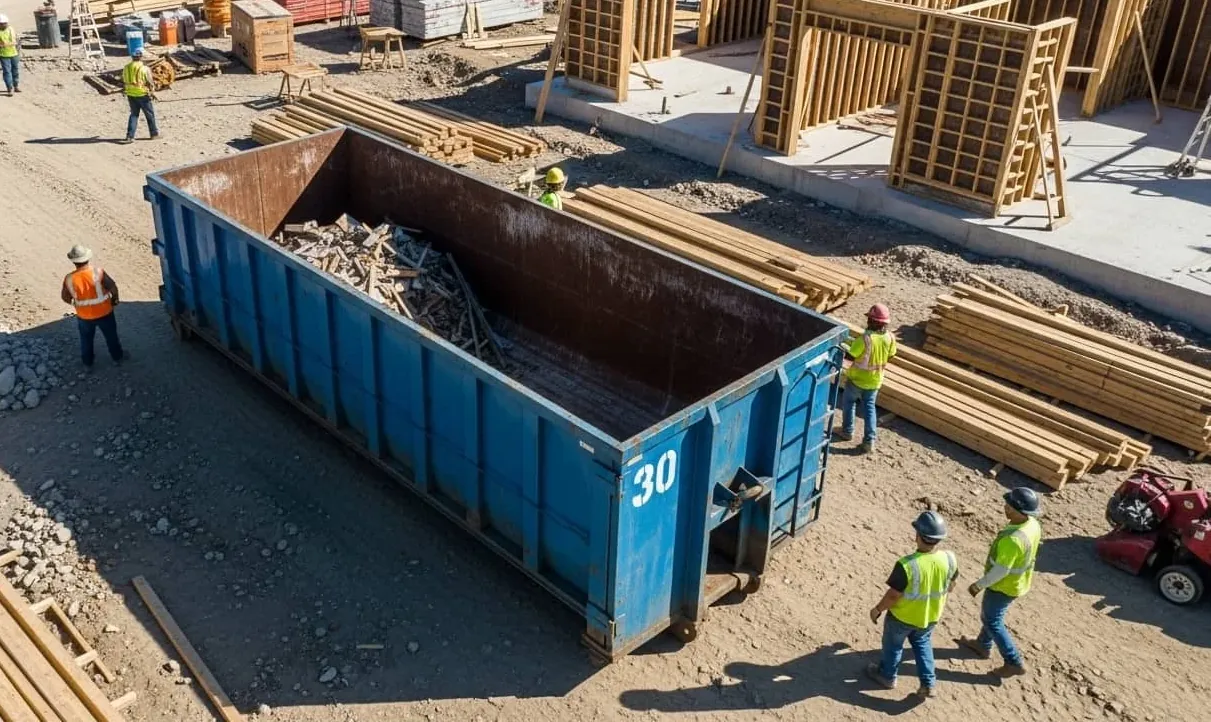
Here is the part I know cold. Tear-off is the loudest, fastest, most disruptive day of the whole process, and it lives or dies on the can showing up at the right moment.
You want it on site the morning the crew starts. Not two days early, blocking your driveway while the neighbors stew. Not on day two, after the crew has stacked debris on your lawn and lost half a day. In peak season every roofer in the metro is chasing the same limited pool of trucks, and a late container costs a full crew day. We keep roofing dumpster capacity reserved specifically for storm work and run priority scheduling for our roofing accounts, and we do same-day and next-morning delivery across Lakewood when a job moves up. Call as soon as you have a start date, not the night before.
Sizing for the material
Tear-off tonnage is about material and layers, not square footage alone. A single layer of architectural asphalt on an average Lakewood ranch usually lands in a 20-yard; a two-story with two layers, or a big walkout ranch, is a 30-yard conversation. Two things shift the math on post-claim Denver roofs. Class 4 impact-resistant shingles run heavier per square than the three-tab they replace. And concrete or clay tile is a different calculation entirely — dense and volume-deceiving. Work through our roofing tear-off size guide and the full size comparison, and if you are between a 20-yard and a 30-yard, call and describe the house. Two minutes on the phone beats a second haul.
Placement and protection
Most Lakewood roofs get a driveway set — shortest carry, no permit needed on private property. Older neighborhoods off Sheridan and Wadsworth often have alley access, which is better if the alley is wide enough for the truck to swing. Tell us about new flatwork before delivery, not after; we run boards under the rails as standard practice, and our notes on protecting a driveway during delivery cover the rest. Keep the roll path clear of sprinkler heads, low limbs and the gas meter. A street set is a permit conversation with the city before delivery day.
Where the old shingles end up
Asphalt shingle recycling does exist in the Denver metro, though availability and acceptance standards move around and older material can carry restrictions. Ask when you book and we will tell you what is realistic for your load that week — our Jefferson County recycling and disposal guide has the current picture. Shingles are also one of the few loads where mixing hurts you: keep yard waste, fence pickets and the garage cleanout out of the roofing can.
The calm version of all this
Document it, report it, get the scope in writing, hire local, know what your carrier is paying and when, and put the container on the calendar the day the roofer gives you a start date. That is the whole thing. Most of the money people lose on a hail claim gets lost in the first two weeks, to a signature they gave a stranger on their porch.
We have run this from our yard on South Pierce since 2012, serving homeowners and roofing crews across Lakewood, Jefferson County and the west metro. Flat-rate, no surprise line items — see our Lakewood cost breakdown or read how we got here on the about page.
Got a start date, or just trying to figure out what size you need? Call Cole and the crew at (720) 473-6600 and we will get a container reserved for your tear-off morning — same-day and next-morning delivery across Lakewood and Jefferson County, priority scheduling for roofing accounts all hail season. You can also reach us through our contact page.
Questions this guide did not answer? Call (720) 473-6600. We would rather spend two minutes on the phone than have you order the wrong container.