
Dumpster Sizes
What Size Dumpster Do I Need? A Lakewood Homeowner's Sizing Guide
A Lakewood operator's guide to picking the right roll-off: cubic yards in pickup loads, weight limits versus volume, footprints for all five sizes, and the heavy-material rule that saves homeowners real money.
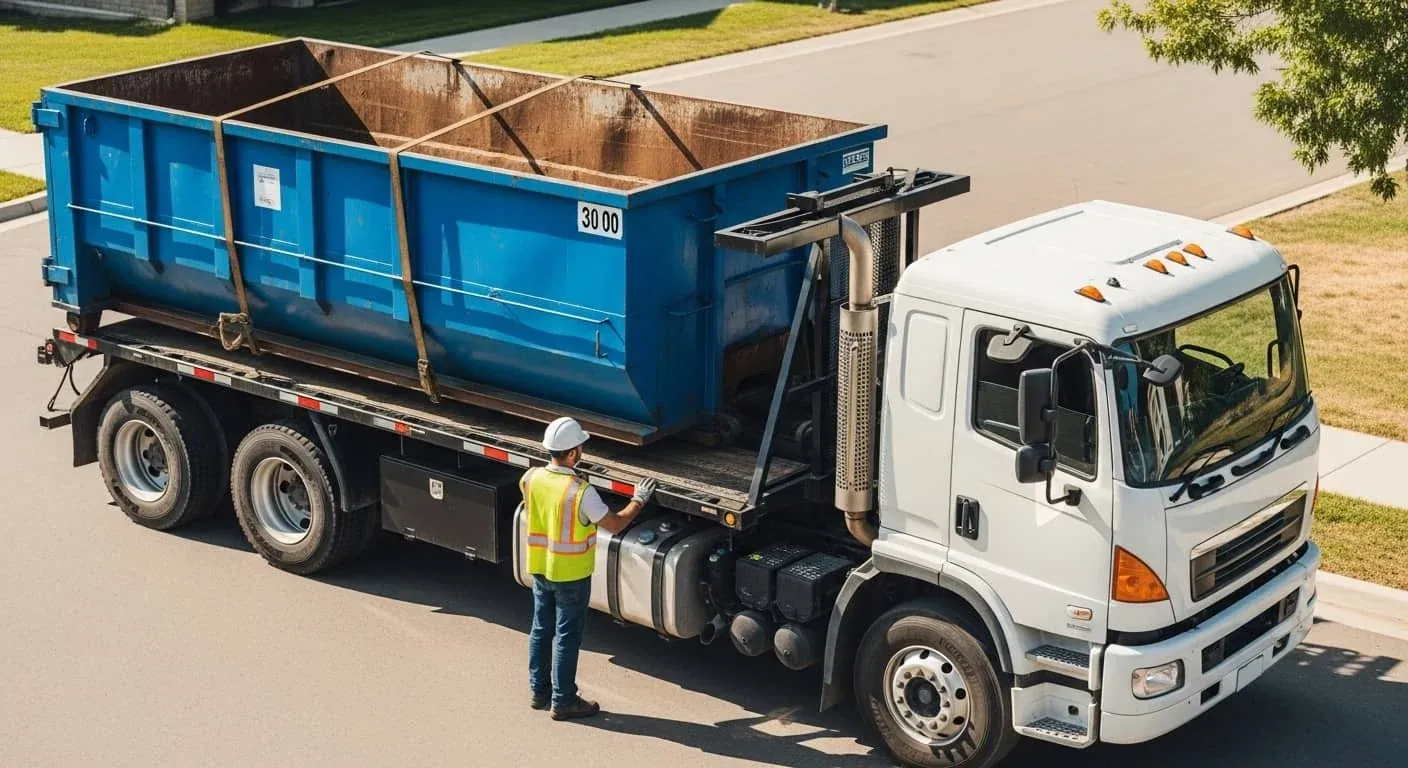
I get this call twenty times a week from Lakewood homeowners, usually the night before a Saturday demo: "How big a dumpster do I need?" The honest answer is that size is the second question. The first one is what the debris weighs. I have watched people order a 30 yard for a patio tear-out and fill it a quarter of the way before it was too heavy to legally haul, and I have watched people order a 10 yard for a whole-house cleanout in a Green Mountain split-level and need three of them. Both mistakes cost real money. This guide is how we size containers at LWC after thirteen years of hauling in Jefferson County.
Cubic yards, translated into something you can picture
A cubic yard is a cube three feet on every side — 27 cubic feet. Nobody thinks in cubic feet, so here is the conversion that actually helps:
- 1 cubic yard is roughly 9 to 10 contractor bags (the 42-gallon black ones) packed tight.
- 1 cubic yard is about two-thirds of a standard 6-foot pickup bed loaded level with the rails. A full-size half-ton bed loaded level holds a hair under 2 yards.
- So a 10 yard is roughly 5 to 6 level pickup loads, a 20 yard is 10 to 12, and a 40 yard is a little over 20 pickup loads.
That last number is why people underestimate the small cans and overestimate the big ones. Six trips to the transfer station in your own truck is an entire weekend and a wrecked tailgate. A 10 yard roll-off swallows that in one drop.
The number one mistake: buying volume when you are paying for weight
Every roll-off comes with a tonnage allowance — the weight included in your flat rate before overage charges start. Volume is the box. Tonnage is the load. Those two limits are independent, and on the Front Range the tonnage limit is the one that bites, because so much of what we haul here is dense.
Rough weights we see on the scale at the Jeffco-area transfer sites:
- Broken concrete or flatwork: about 4,000 lb per cubic yard. Two tons per yard.
- Landscape rock, river cobble, 1.5" granite: 2,400 to 2,800 lb per yard.
- Flagstone and dry-stack wall block: 3,000 lb-plus per yard, and it stacks with almost no air gaps.
- Soil and sod: 2,000 to 2,700 lb per yard depending on how wet it is after an afternoon storm.
- Asphalt shingles: roughly 250 lb per square (100 sq ft) per layer.
- Framing lumber, drywall scrap, furniture, cabinetry: 200 to 500 lb per yard. Light.
Run the math on a 20 yard filled with concrete and you get 40 tons in a container rated for a fraction of that. The truck cannot legally leave your driveway. That is the whole reason we split the world into heavy debris and bulky debris before we ever talk about size. If you want the pricing side of that conversation, our breakdown of dumpster rental cost in Lakewood walks through how tonnage allowances and overage rates work on a flat-rate quote.
Footprints: what actually fits a Lakewood driveway
Standard footprints for our fleet. Add roughly 22 feet of clear space behind the container for the truck to roll it off, and about 23 feet of vertical clearance — that is the part people forget under a mature silver maple or a low power drop on an older Belmar-area street.
| Size | Approx. footprint (L x W x H) | Pickup loads | Best for | Typical Lakewood driveway | Foothills sloped drive | Alley-access lot |
|---|---|---|---|---|---|---|
| 10 yard | 12' x 8' x 3.5' | 5-6 | Concrete, rock, dirt, small remodels | Yes - fits beside a parked car | Yes - the only size I like on steep grades | Yes |
| 15 yard | 14' x 8' x 4' | 7-8 | Bath gut, single-room cleanout, small roof | Yes | Usually yes | Yes |
| 20 yard | 22' x 8' x 4.5' | 10-12 | Kitchens, basements, most re-roofs | Yes on most 1950s-70s two-car drives | Case by case - needs a flat pad | Tight; needs a clean approach |
| 30 yard | 22' x 8' x 6' | 15-16 | Whole-house remodel, large cleanout, big tear-off | Usually - measure first | Rarely | Usually no |
| 40 yard | 22' x 8' x 8' | 20-22 | Bulky light debris, commercial fit-out | Only on long, flat drives | No | No |
The typical Lakewood driveway
Most of the brick ranches between Wadsworth and Kipling have a two-car driveway 18 to 24 feet deep. A 10, 15 or 20 yard drops there without drama. A 30 fits on many of them but eats the whole apron, so you lose both parking spots. If the container has to sit in the street instead, check the rules first — our guide to dumpster permits in Lakewood covers right-of-way placement, and the City of Lakewood is the authority on street use.
Foothills and sloped drives
Toward Morrison, Evergreen and the upper Green Mountain streets, grade is the constraint, not length. A loaded roll-off on a steep drive wants to move, and the cable roll-off process needs the truck square behind the box. On anything over about a 10 percent grade I put a 10 or a 15 yard container on the flattest pad available, or we stage at the street. On a fresh or decorative drive, ask for boards under the rails when you book.
Alley-access lots
Older Lakewood and west Denver alleys run 12 to 16 feet wide with fences, meters and utility poles at the pinch points. A 10 or 15 goes in clean. A 20 is doable if the alley is straight and nobody is parked across it. A 30 or 40 in an alley is generally a no. Send us a photo and we will tell you straight before the truck rolls.
Size by project
| Project | Size I'd send | Why |
|---|---|---|
| Single bathroom gut | 10-15 yard | Tile, tub, vanity, small drywall volume - heavier than it looks |
| Kitchen gut | 20 yard | Cabinetry and countertop are bulky; 15 works for a galley |
| Basement finish (1,000-1,400 sq ft) | 20 yard | Framing scrap, drywall, carpet, packaging - light and bulky |
| Popcorn ceiling scrape | 10 yard | Low volume, wet slurry is heavy; test first if pre-1980 |
| Single-room cleanout | 10-15 yard | Furniture and boxes compress more than people expect |
| Whole-house cleanout | 30-40 yard | Pure bulk, almost no density - the 40's best use case |
| Roof tear-off, 20-30 squares | 20 yard | Shingles hit tonnage before they hit the rails |
| Deck demo, 300-500 sq ft | 15-20 yard | Awkward lengths need floor space, not height |
| Two-car garage cleanout | 15-20 yard | Watch for paint, tires and chemicals - those come out |
| Xeriscape sod-and-rock conversion | 10 yard (often two) | Sod and rock are dense; volume is irrelevant here |
Two notes on that table. For roofs, layer count changes everything — a two-layer tear-off doubles your tonnage on the same square footage, and our roofing tear-off sizing guide breaks it down by square. And on any pre-1980 Jeffco house, popcorn ceilings and sheet vinyl need testing before you scrape. Colorado's Regulation No. 8 requires inspection by a certified inspector before renovation that disturbs more than trigger amounts; start with asbestos testing before renovation and the Colorado Department of Public Health and Environment.
When the 40 yard is right, and when it is a trap
The 40 yard is a volume container. Eight feet of sidewall, twenty-plus pickup loads. It earns its keep on:
- Whole-house cleanouts and estate clearing where you are moving furniture, boxes and decades of storage.
- Framing, siding and cabinetry demolition — big, air-filled, light per yard.
- Commercial fit-outs and tenant improvements with fixtures, partitions and packaging.
It is a trap everywhere else. Those eight-foot walls mean you are lifting debris chest-high or higher over the rail — there is no walk-in door on a 40 the way there is on smaller cans, and even where there is, you are throwing material a long way. It needs a long flat approach and 23 feet of overhead. And if you put anything dense in it, you hit the tonnage ceiling with the box a third full and pay for capacity you never used. If your load is heavy, a 30 yard or two smaller pulls beats a 40 every time.
The local heavy-material rule
Here is the rule we do not bend: concrete, flagstone, landscape rock, brick, block, dirt and sod go in a 10 yard, no matter how big the job feels. A patio tear-out that looks like it needs a 30 will fill a 10 and be at legal weight. That is not us being stingy — it is axle weight law, and it is why we run dedicated heavy-debris containers with clean-load pricing. Clean concrete with no rebar, wood or trash mixed in often goes to recycling instead of the landfill at a better rate.
Xeriscape jobs are the ones that surprise people most. Pulling 800 square feet of bluegrass and hauling out the old cobble is easily 6 to 8 tons of material out of a yard that looked small. Two 10 yard pulls, or one for sod and one for rock. More detail in our xeriscape debris removal guide.
Size up, or take two hauls?
For light bulky debris, size up. The price gap between a 20 and a 30 is smaller than the cost of a second delivery, and running out of room mid-demo stalls the whole crew. For heavy debris, never size up — take two hauls, because the bigger box does not raise your legal weight. And if you genuinely cannot call it, order the smaller can and keep our number handy; we do same-day and next-day swaps across Lakewood and most of our Jeffco service area.
Overfill and level-load rules
- Load level with the top rail. Nothing above the sidewall. A heaped container cannot be tarped, and untarped loads shed debris on 6th Avenue and Wadsworth.
- Heavy and flat on the bottom, bulky on top. Lay drywall, plywood and shingles flat and build up.
- Break down what you can. Snapping pallets and collapsing boxes buys back 20 to 30 percent of usable volume.
- Keep the door end clear if you are using a walk-in door — you have to be able to close and pin it.
- Watch the chinooks. Cover light material overnight; a 70 mph gust off the foothills will redistribute your insulation across the neighborhood.
Paint, tires, batteries, appliances with refrigerant and anything flammable come out of the load before pickup — sort those to the side on cleanout day. When you are ready to compare all five containers side by side, our dumpster sizes page has the full specs.
Still not sure? Tell us the project and we will size it for you in about two minutes — no guessing, no upsell. LWC Dumpster Rental has been serving Lakewood, Jefferson County and the west Denver metro since 2012, licensed and insured, flat rate, with same-day and next-day delivery. Call (720) 473-6600 and we will get the right container in your driveway.
Questions this guide did not answer? Call (720) 473-6600. We would rather spend two minutes on the phone than have you order the wrong container.