Waste Guide
What Can (and Can't) Go in a Dumpster in Jefferson County, CO
A straight answer from a Lakewood operator on what belongs in a roll-off, what never does, the Colorado asbestos and electronics rules that catch homeowners, and where every banned item actually goes.
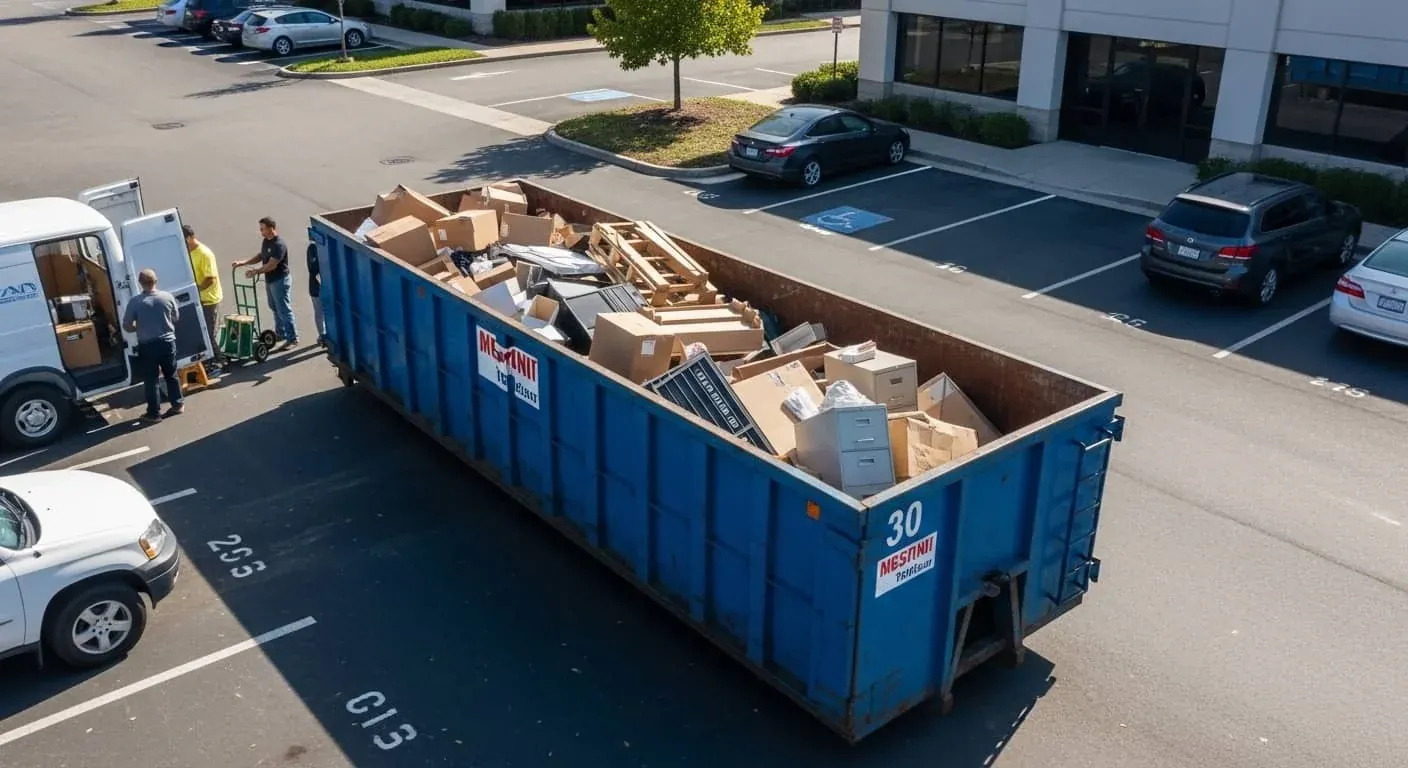
I have been loading and hauling containers around Lakewood since 2012, and the single question that comes up more than pricing, more than sizing, more than "can you fit it in my driveway" is this one: what am I actually allowed to put in the thing? Fair question. The answer is not the same in every state, and Colorado has a few rules that surprise people who moved here from somewhere else.
Here is the plain version. A roll-off container is built for solid, non-hazardous, non-liquid waste. Almost everything that comes out of a house, a garage, a re-roof or a remodel qualifies. The banned list is short, but it is short for good reasons, and one item on it — asbestos — has a specific Colorado rule attached that catches a lot of homeowners in Lakewood's older neighborhoods off guard. Read the asbestos section even if you skip everything else.
The always-accepted list
If it came out of a house, a yard or a job site and it is dry, solid and not on the prohibited list below, it goes in. Specifically:
- Household junk and furniture — couches, mattresses, box springs, dressers, tables, bookshelves, toys, clothing, boxes of accumulated garage clutter. Standard fare for a residential dumpster rental or a full estate cleanout.
- Appliances without freon — washers, dryers, electric and gas ranges, dishwashers, water heaters, microwaves.
- Carpet, pad and flooring — including laminate, vinyl plank and hardwood.
- Drywall, lumber, framing scrap, trim and cabinetry from a remodel.
- Decking, fencing and pergola material, pressure-treated included.
- Asphalt shingles and roofing debris — felt, ridge cap, nails, flashing, the whole tear-off.
- Concrete, brick, block, flagstone, pavers, dirt and landscape rock — but only in a dedicated heavy can. More on that below.
- Sod, soil, branches, shrubs, tree limbs and general yard debris.
- Remodeling debris in general — tile, plaster, insulation, subfloor, tubs, vanities, countertops.
- Non-hazardous commercial and retail waste — fixtures, shelving, pallets, packaging, office furniture.
Heavy material needs its own container
Concrete, brick, flagstone, dirt and rock are accepted, but they are not accepted mixed into a general debris load. A cubic yard of concrete runs roughly 4,000 pounds, so a 20-yard can filled with it would weigh more than my truck can legally lift, let alone haul over I-70. Clean, dedicated heavy material goes to a recycler and gets crushed into road base. Mixed with drywall and carpet it goes to a landfill at a much higher rate. That is why we put heavy debris in a low-sided 10-yard can and keep it clean — see our concrete and heavy debris service for how that works. If you are not sure which category your project falls into, the sizing guide walks through it.
The never-accepted list, and why
None of this is us being difficult. Every item below is either banned by Colorado statute, refused at the transfer station scale house, or genuinely dangerous in the back of a truck that compacts and tips its load.
| Material | Status | Why / where it goes instead |
|---|---|---|
| Household junk, furniture, mattresses | Accepted | Standard solid waste |
| Drywall, lumber, cabinetry, trim | Accepted | Standard C&D debris |
| Asphalt shingles | Accepted | Roofing can, weight-rated |
| Concrete, brick, flagstone, rock, dirt | Accepted — dedicated can only | Weight limits; goes to a crusher, not a landfill |
| Sod, branches, yard debris | Accepted | Often diverted to compost |
| Appliances without freon | Accepted | Scrap steel recovery |
| Wet paint, stain, solvents, thinner | Prohibited | Liquid hazardous waste — PaintCare drop-off site |
| Motor oil, antifreeze, gasoline, diesel | Prohibited | Regulated used oil — auto parts store or HHW facility |
| Pesticides, herbicides, pool chemicals | Prohibited | Reactive/toxic — household hazardous waste facility |
| Asbestos-containing material | Prohibited | State-regulated; licensed abatement contractor only |
| Propane tanks, cylinders, fire extinguishers | Prohibited | Explode under compaction — exchange or scrap yard |
| Lithium-ion and lead-acid batteries | Prohibited | Fire risk / state restrictions — retailer take-back |
| Medical and biohazard waste, sharps | Prohibited | Regulated waste stream |
| Tires | Prohibited | Colorado landfill restriction — tire retailer |
| Refrigerators, freezers, A/C, swamp coolers | Prohibited | Refrigerant must be recovered first |
| TVs, monitors, computers, printers | Prohibited | Colorado electronics landfill ban |
| Railroad ties, creosote-treated timber | Prohibited | Creosote is a regulated contaminant |
| Contaminated soil | Prohibited | Requires profiling and a permitted facility |
| Ammunition, flares, explosives | Prohibited | Detonation hazard — call local law enforcement |
A word on propane and batteries in particular. Both of those have set trucks on fire in this metro. A 20-pound grill tank buried under a load of framing scrap gets punctured when the load shifts, and a lithium pack from a cordless drill or an e-bike ignites when it is crushed. If you have either one, hand it to the driver or set it aside — do not bury it and hope.
Colorado's specific rules — the part that trips up Lakewood homeowners
Asbestos: stop and test before you scrape
This is the big one, and it is the reason I wrote this article. Under CDPHE Regulation No. 8, Part B, an asbestos inspection performed by a Colorado-certified asbestos building inspector is required before renovation or demolition work that will disturb more than the trigger amounts. For a single-family home those triggers are 50 linear feet on pipes, 32 square feet on other surfaces, or the volume of a 55-gallon drum. For public and commercial buildings it is 260 linear feet, 160 square feet, or the same drum volume. The inspector has to work for a registered asbestos consulting firm. There is a narrow exception for buildings built after October 1988 with documentation that no asbestos-containing materials were used.
Now look at the housing stock. Lakewood, Applewood, Bear Creek, the neighborhoods off West Colfax and Wadsworth — a huge share of it is 1950s through 1970s brick ranch. In those houses the usual suspects are popcorn ceiling texture, 9x9 and 12x12 floor tile, the black cutback mastic under it, wrapped pipe insulation in the basement, and the joint compound in the drywall seams. Thirty-two square feet is a bathroom ceiling. It is not a big number.
So here is the rule I give every customer: a suspect ceiling scrape is a stop-and-test moment, not a container job. Get a sample pulled and tested first. It costs a fraction of what it costs to clean up an improper disturbance, and no legitimate hauler in Jefferson County will knowingly take asbestos-containing material in an open-top can. Once material is confirmed and abated by a licensed contractor, that contractor handles the waste through a permitted disposal path — not through us. If the test comes back clean, we will have a can in your driveway the same day. We cover the testing sequence in more detail in our guide to asbestos testing before a Colorado renovation, and the EPA's asbestos resources are worth ten minutes of your time if you are about to open up an old wall.
The electronics landfill ban
Colorado prohibits disposal of electronics in landfills. That covers televisions, desktop and laptop computers, monitors, tablets, printers, fax machines, keyboards, mice and other peripherals. It applies to the old tube TV in the basement and the flat panel that got replaced last Christmas. Electronics go to an e-waste recycler, a county collection event or a retailer take-back program.
Tires, batteries and used oil
Colorado restricts waste tires, lead-acid batteries and used oil from ordinary landfill disposal, and each has a well-established take-back channel. Tires go back to a tire retailer, usually for a small per-tire recycling charge. Lead-acid car batteries go back to any auto parts store — they take them, and most credit you a core deposit. Used motor oil and antifreeze go to a household hazardous waste facility or a shop that accepts them.
Where each banned item actually goes
Knowing what you cannot throw away is only half of it. Here is the local routing:
- Paint, solvents, cleaners, pesticides, pool chemicals, oil, antifreeze, batteries and electronics — the Jefferson County household hazardous waste program is served by the Rooney Road Recycling Center in Golden. It is open to Jeffco residents by appointment only, so book before you load up. Other metro counties run their own facilities and collection events.
- Leftover architectural paint — PaintCare drop-off sites are hosted at participating paint and hardware retailers across the metro. Latex, oil-based, stain and varnish in original labeled containers.
- Refrigerators, freezers, window A/C units and evaporative coolers — an appliance recycler with EPA-certified refrigerant recovery, or a utility appliance turn-in program. Once the refrigerant is documented as removed, the shell is fine in a can.
- Scrap metal — cast iron, structural steel, copper, aluminum and old radiators are worth money at a metals yard. Pull them before we haul.
- Tires — tire retailers and dedicated tire recyclers.
- Ammunition and flares — contact the Lakewood Police Department or Jefferson County Sheriff. Never the trash.
Our companion piece on recycling and disposal in Jefferson County goes deeper on the drop-off options, and the construction debris disposal guide covers the contractor side.
Mixed loads: one bad item can flag the whole can
This is the part people underestimate. Roll-off loads get inspected. At the scale house a tipping floor operator watches the material come out, and if a spotter sees a paint can, a tube TV, a car battery or a propane bottle roll out of a 30-yard load, the problem is not that one item. The whole load can get reclassified, refused, or hit with a special-handling charge, and I have to pull the item and re-route the material. That is a real cost, and it is the one situation where a flat rate stops being flat.
So the fifteen seconds you spend setting aside one paint can saves everybody a bad afternoon. Same goes for the swamp cooler that came off the roof during a re-roof — those are extremely common on Front Range houses, they contain no refrigerant in the evaporative style but many older units are paired with equipment that does, and a rooftop refrigerated unit absolutely has to be evacuated first.
Loading so nothing gets rejected
- Sort before you load, not after. Set out a five-gallon bucket for hazardous odds and ends as you work. Paint, aerosols, batteries, bulbs, chemicals.
- Keep heavy material separate. Concrete, dirt, tile and rock in the dedicated can. Everything else in the general can.
- Load flat and load heavy first. Sheet goods and lumber laid flat on the floor, bulky voids filled with soft debris, nothing sticking above the rail.
- Do not overfill. Anything above the top rail cannot be tarped, and an untarped load does not leave the property. That is DOT, not preference.
- No liquids, period. Even a half-full can of driveway sealer counts. Rain and snow turn a partly-liquid load into leachate, and Front Range afternoon storms fill an open can fast.
- Bag the fines. Insulation, ash, drywall dust and popcorn scrapings blow out of an open can on Sixth Avenue at 60 mph.
Yard projects have their own quirk — sod is heavier than it looks, roughly a ton per 10 by 10 section when it is wet, which is why yard waste jobs often want a smaller can than customers expect.
When in doubt, call and ask
Nobody expects a homeowner to have Regulation No. 8 memorized. That is my job. If you are staring at something and you genuinely do not know — an unlabeled drum in the crawlspace, a stack of ties along the fence line, a ceiling you are suspicious of — take a photo and call before it goes in the can. A two-minute conversation is free. A rejected load is not.
We serve Lakewood, Golden, Wheat Ridge, Arvada, Morrison, Littleton and the rest of the west metro — see our service areas or reach out here. Flat-rate pricing, licensed and insured, same-day delivery on most orders. Call LWC Dumpster Rental Lakewood at (720) 473-6600 and tell us what you are throwing away — we will tell you straight whether it goes in the can, and where it goes if it does not.
Questions this guide did not answer? Call (720) 473-6600. We would rather spend two minutes on the phone than have you order the wrong container.